Curriculum
Carillon’s approach to learning
Every subject starts with assessment, not assumption. Instruction is then built backwards from what a student actually needs next.
Reading & writing
Standardized inventories and one-to-one observation before the school year begins give us each student's decoding, comprehension, spelling, phonological and phonics-pattern baseline. Those results drive the individual education plan.
Through the year, students get individual and small-group phonological instruction, Orton-Gillingham-based readers and workbooks, and hands-on activities and games. Early writers work on letters, words and sentences; emerging writers use individually designed journals to practice passage reading, answering questions, looking back for information and summarizing.
Writing instruction runs through grammar and sentence structure, group book responses, social studies and science projects, and our Read, Write, and Cook program, where students write about what they actually made in the kitchen.
Math
Grade-level and skill-specific assessments decide where math instruction starts. A third grader still mastering addition and subtraction gets instruction at that level and is also taught third-grade material such as the geometry of four-sided shapes and beginning multiplication.
Lessons open with a short group lesson, then move to individual or paired work on specific skills, with manipulatives, videos, worksheets and online programs filling individual gaps.
Science & social studies
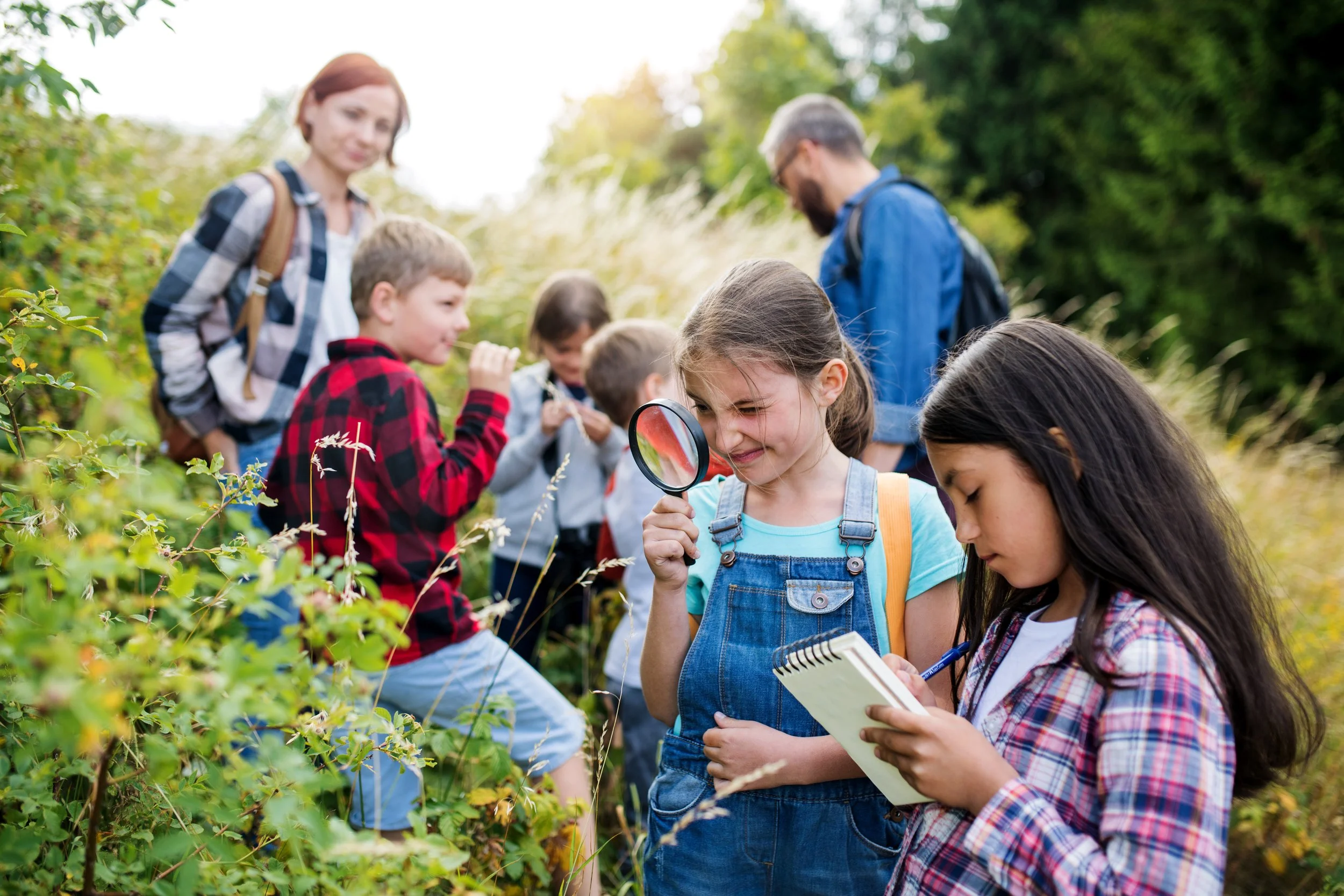
Our multi-grade science curriculum uses projects, videos, field trips, written work and discussion to explore magnetic and electrical fields, ecosystems, chemical reactions and scientific methods.
Social studies covers U.S. history, world geography and culture, often paired with cooking projects or field trips. Students also build research skills with maps, books, videos and online games.
Social learning
Social learning is woven through every day and taught explicitly in morning meetings through discussion, video examples, class book talks and games. Paired projects, cooperative games, cooking, planning celebrations and cleaning up together are where negotiation and collaboration get practiced.
Occupational therapy
Through a partnership with Becky Balog at Adapt & Grow, students may receive occupational therapy weekly on campus. Goals for handwriting, self-regulation or movement are integrated across the school day rather than treated as a separate pull-out.
Beyond the desk
Extracurriculars
Learning topics are woven through the parts of the day students look forward to most.
- Art
- Music and music history
- Read, write, and cook culinary program
- PE and nature walks
- Video and board gaming
- Field trips and library trips
- Holiday celebrations
- Snack store for counting money, making change and economics